Proving demand for a dual opt-in hiring marketplace
Teachers built 4,822 profiles before launch, and the standalone marketplace shipped in March 2024.
Company
Nimble
Role
Product designer
Team
PM, engineering manager
Timeline
2023–2024
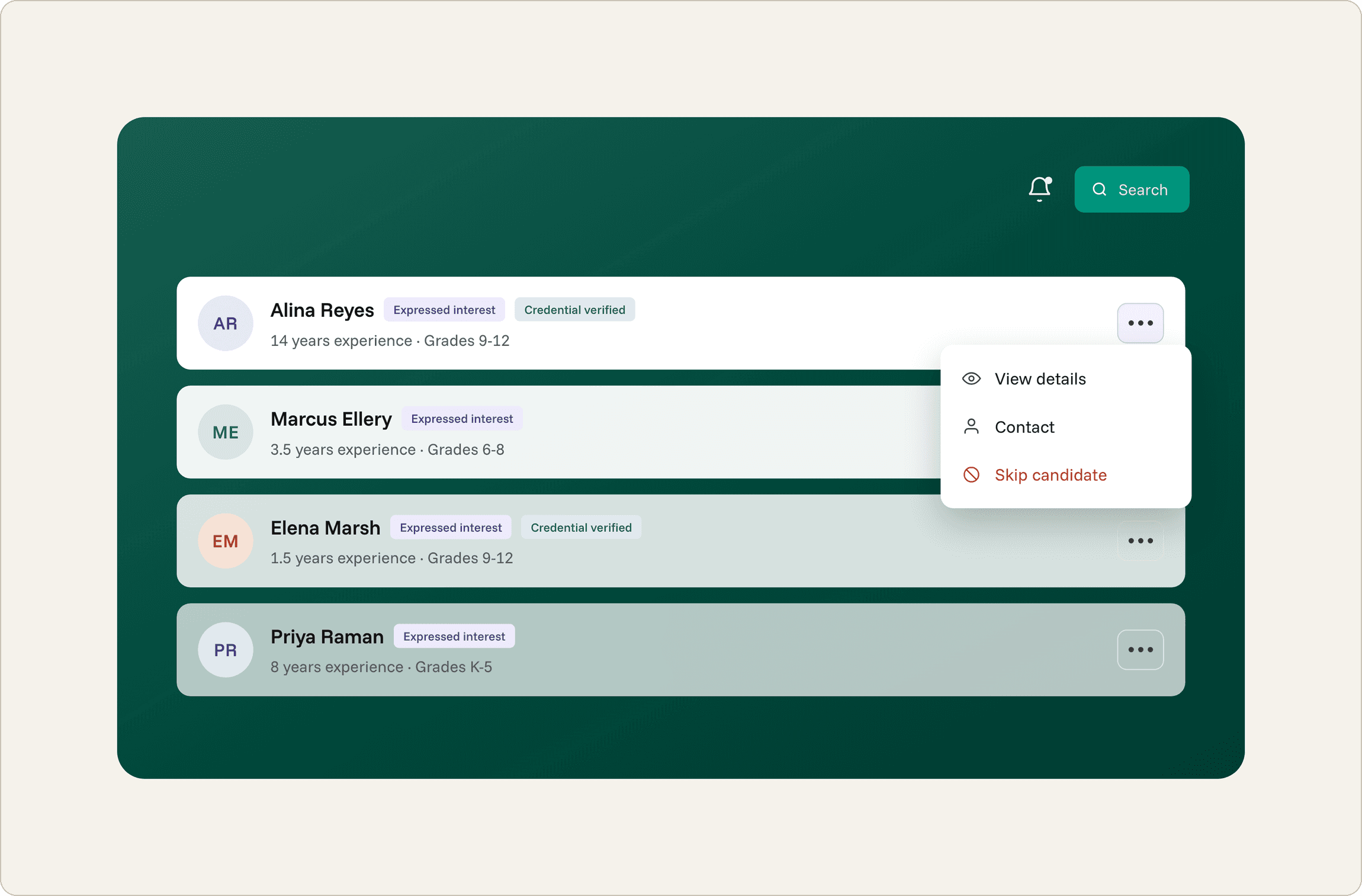
Teachers bypassed the hiring system and knocked on doors
I'd go straight to the school office to drop off my resume and try to chat with the principal. — teaching candidate
In the schools we interviewed, the principal, not district HR, did the hiring.
I was Nimble's first designer. We could not out-feature general ATS vendors, so my PM and I bet on outbound recruiting, the shortcut teachers were already taking.
Teachers wanted to browse; principals wanted commitment
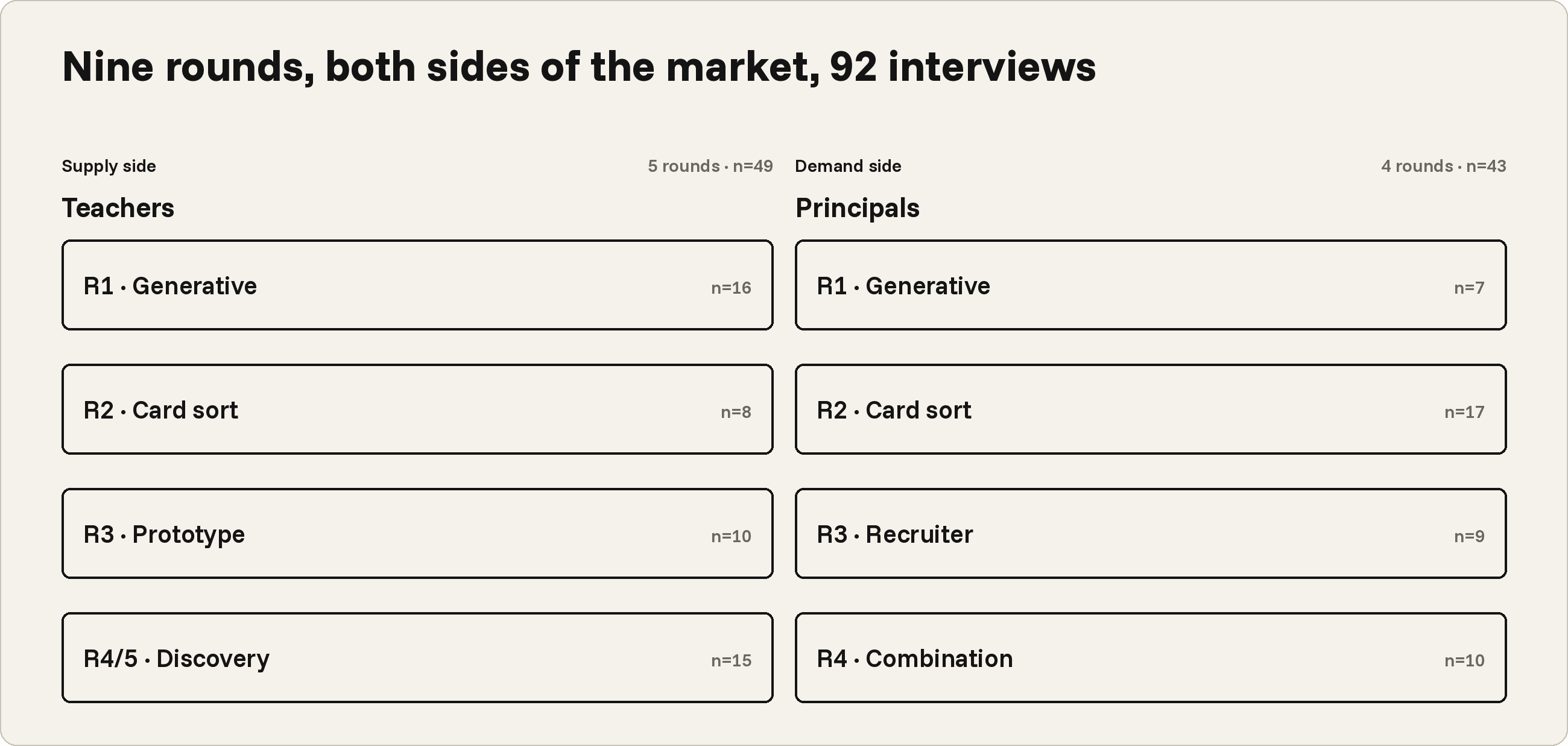
Customer success talked to educators daily; almost none of what they heard reached product, so together we built a way to capture it. That produced 49 teacher interviews and 43 principal interviews. I ran both sides and led the synthesis: teachers wanted to browse widely; principals wanted only candidates who had already committed.
Principals had been burned by services pushing unqualified leads.
Send me the best I haven't seen, then I'll reach out. — school principal
That set the requirement I designed against. Dual opt-in means every candidate a principal sees has already asked to be considered.
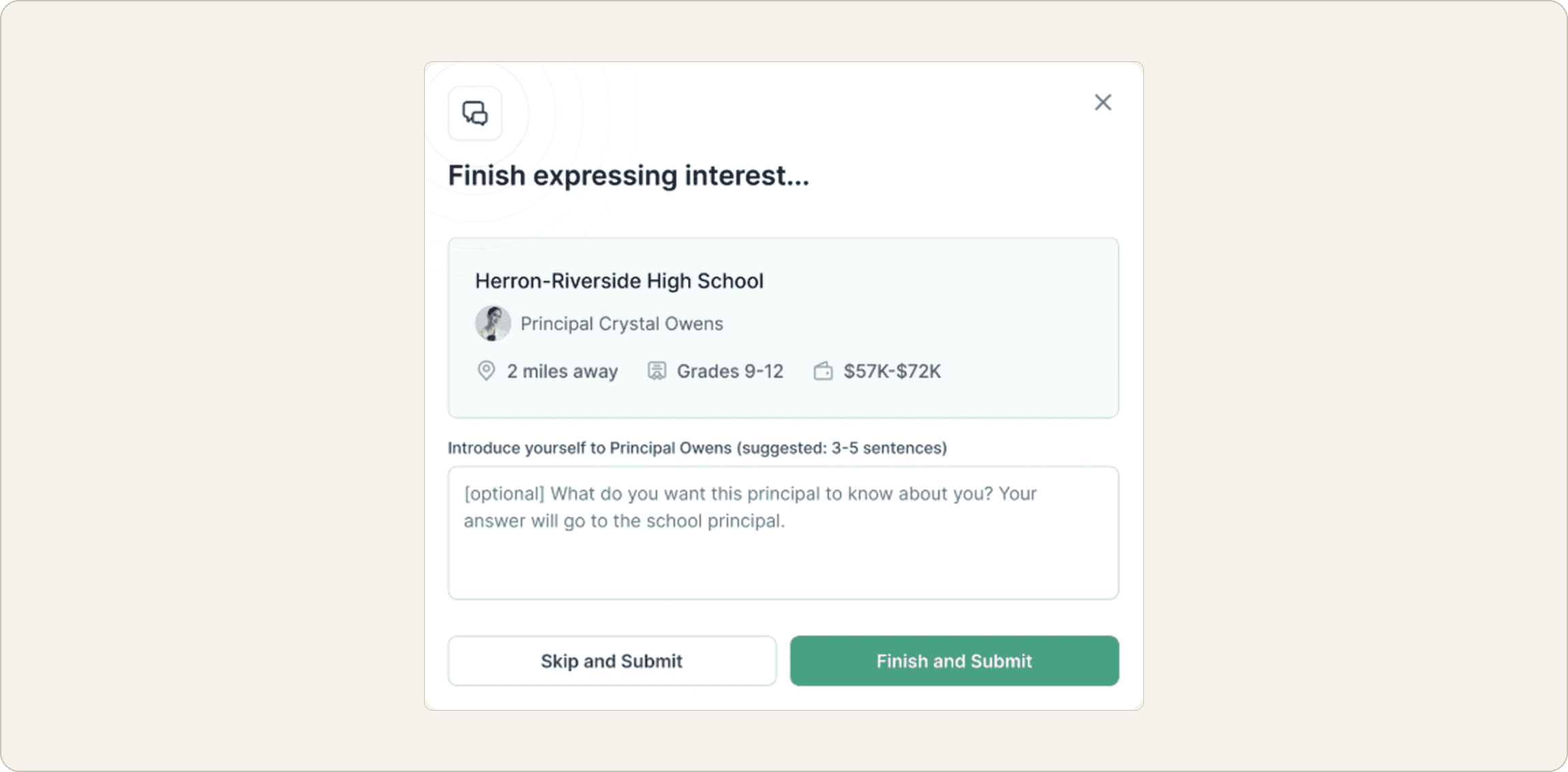
The teacher’s half of the handshake, carrying an optional introduction that goes to the principal.
4,822 profiles were created before the new product launched
Our largest customer, the Indiana Department of Education, opened the door to a pool of job seekers. We built them a centralized job board, live hiring dashboards, and a pilot marketplace where educators built talent profiles that employers could browse.
Scope was tight, so I worked with a PM and an engineer to fold profiles into the existing platform rather than stand up a separate product. That meant a clunkier login and a flow that switched between the state's brand and ours, but it cut the build to something we could pilot.
The 4,822 accumulated over twelve months, with the state's own job board pulling people in alongside us.
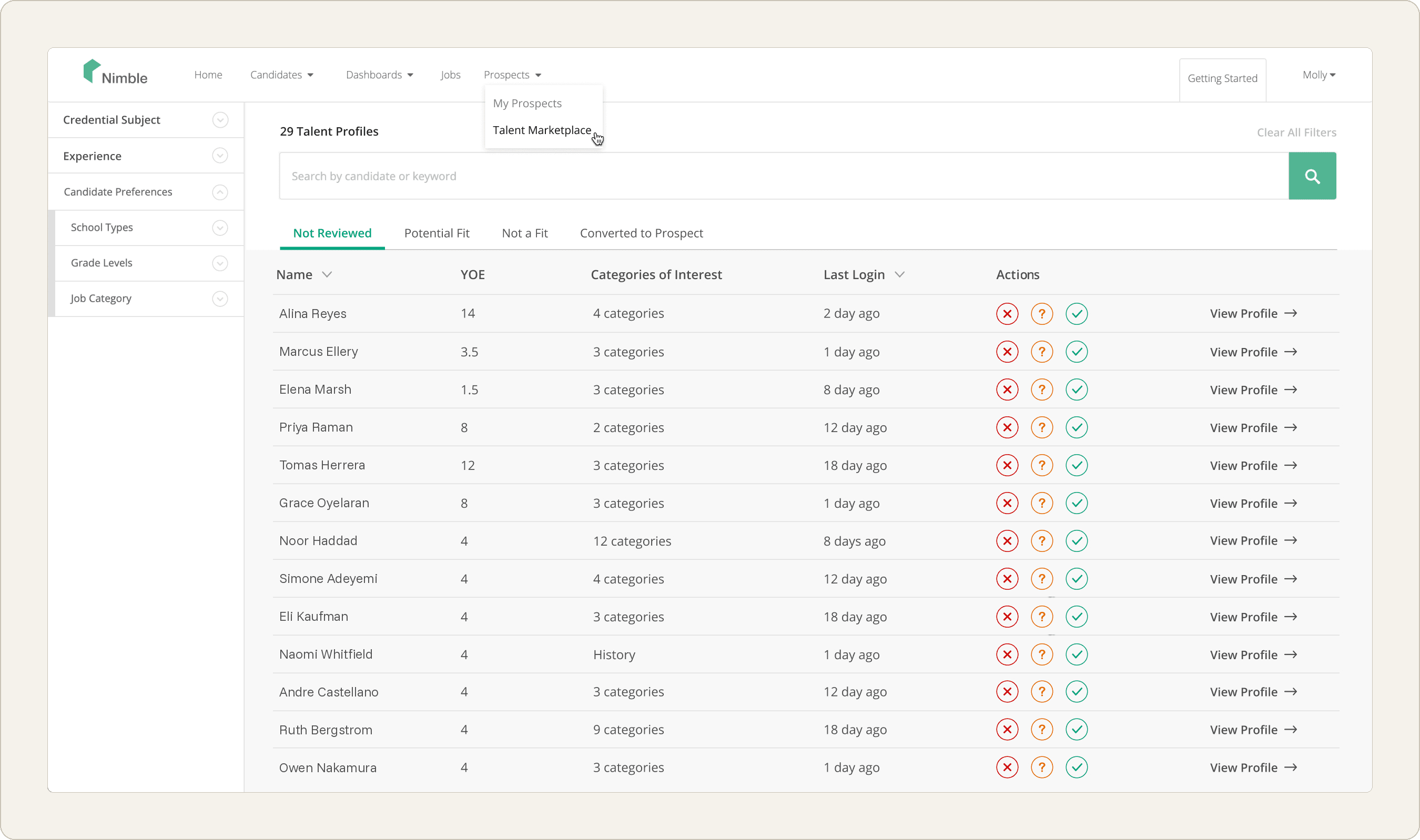
Talent profiles folded into the existing platform under the Prospects menu, with a three-way review on every row.
Teachers said one thing but did another
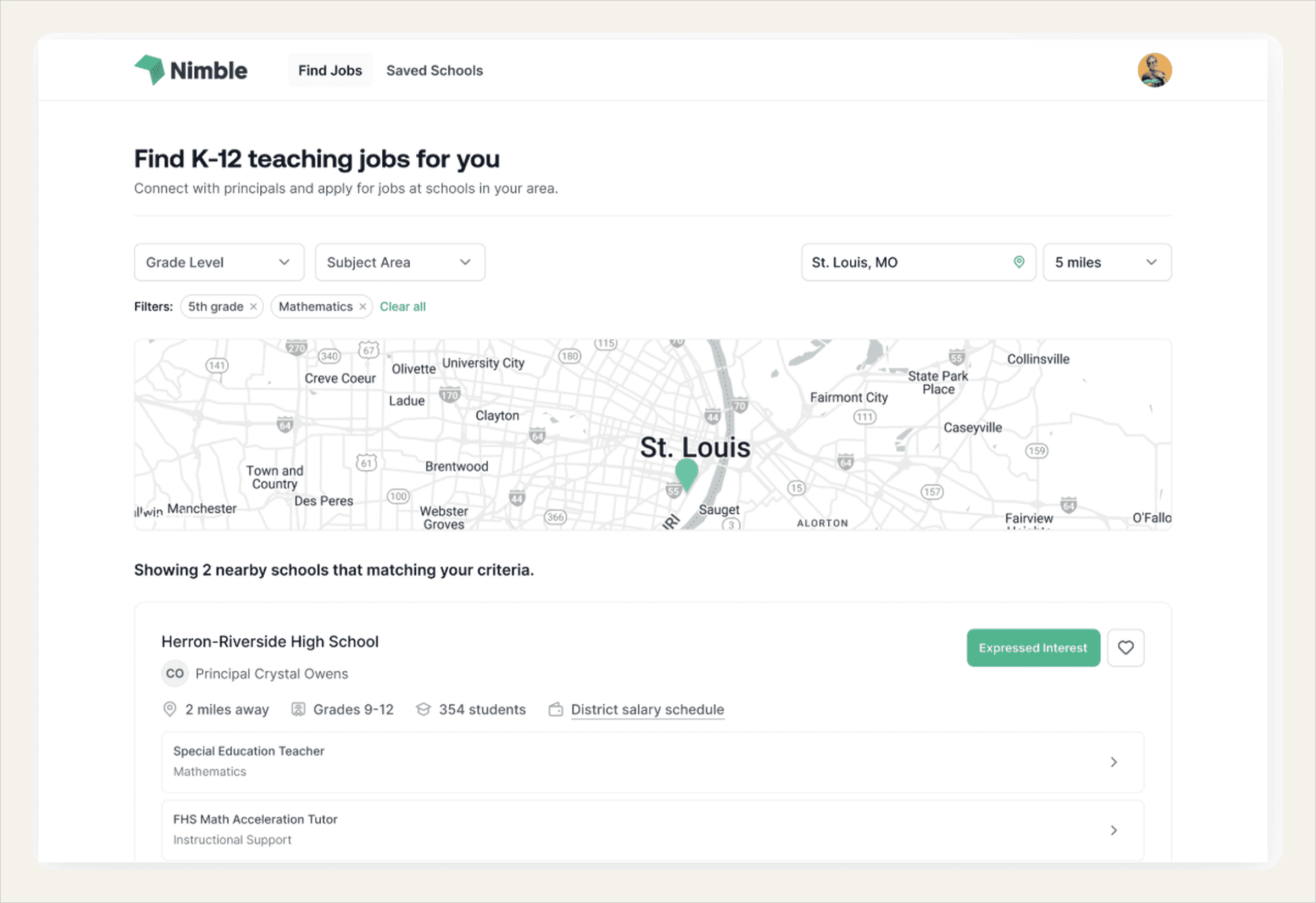
Teachers told us that a principal's leadership philosophy mattered most, so I built discovery around the principal. But when ten teachers clicked through the prototype and narrated what they were doing, almost every one went straight to open jobs, then reached for filters. Interviews tell you what people value. Watching them tells you what they do first.
An open role makes a school worth a look; knowing the principal makes the job worth taking. So the search runs on job criteria, a school surfaces only when it has a matching role, and the principal appears on each result instead of up front.
Teachers got a self-serve platform and principals got an email
Principals couldn't risk losing a strong candidate. Some made verbal offers before anyone reached the ATS. So the email had to work on a phone, at a glance, with the deeper look saved for the desk.
I tested two versions with ten principals: act from the inbox, or go back to the platform. The inbox won.
Each email carried pre-screened candidates and contact details, with the full profile one tap behind.
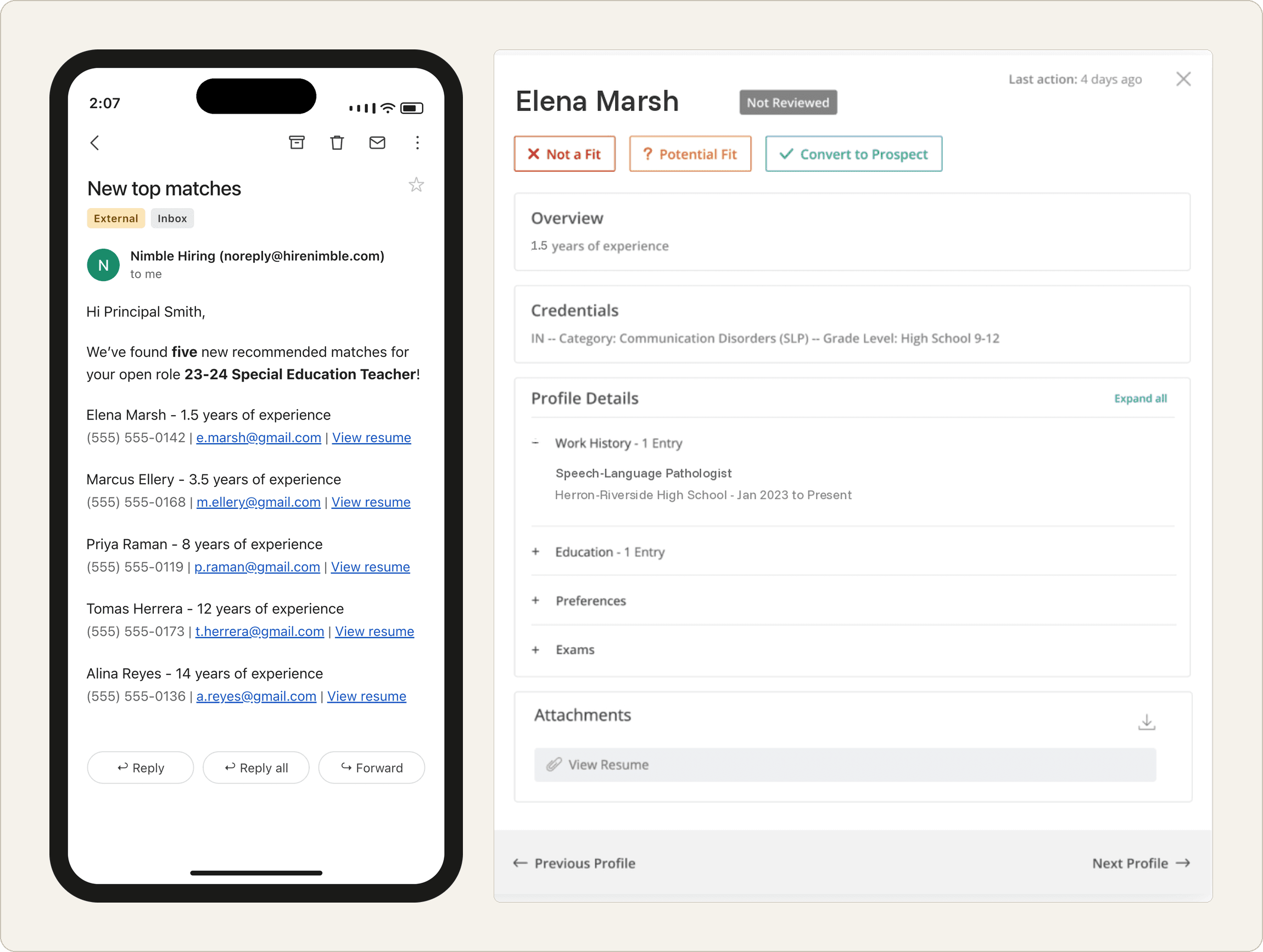
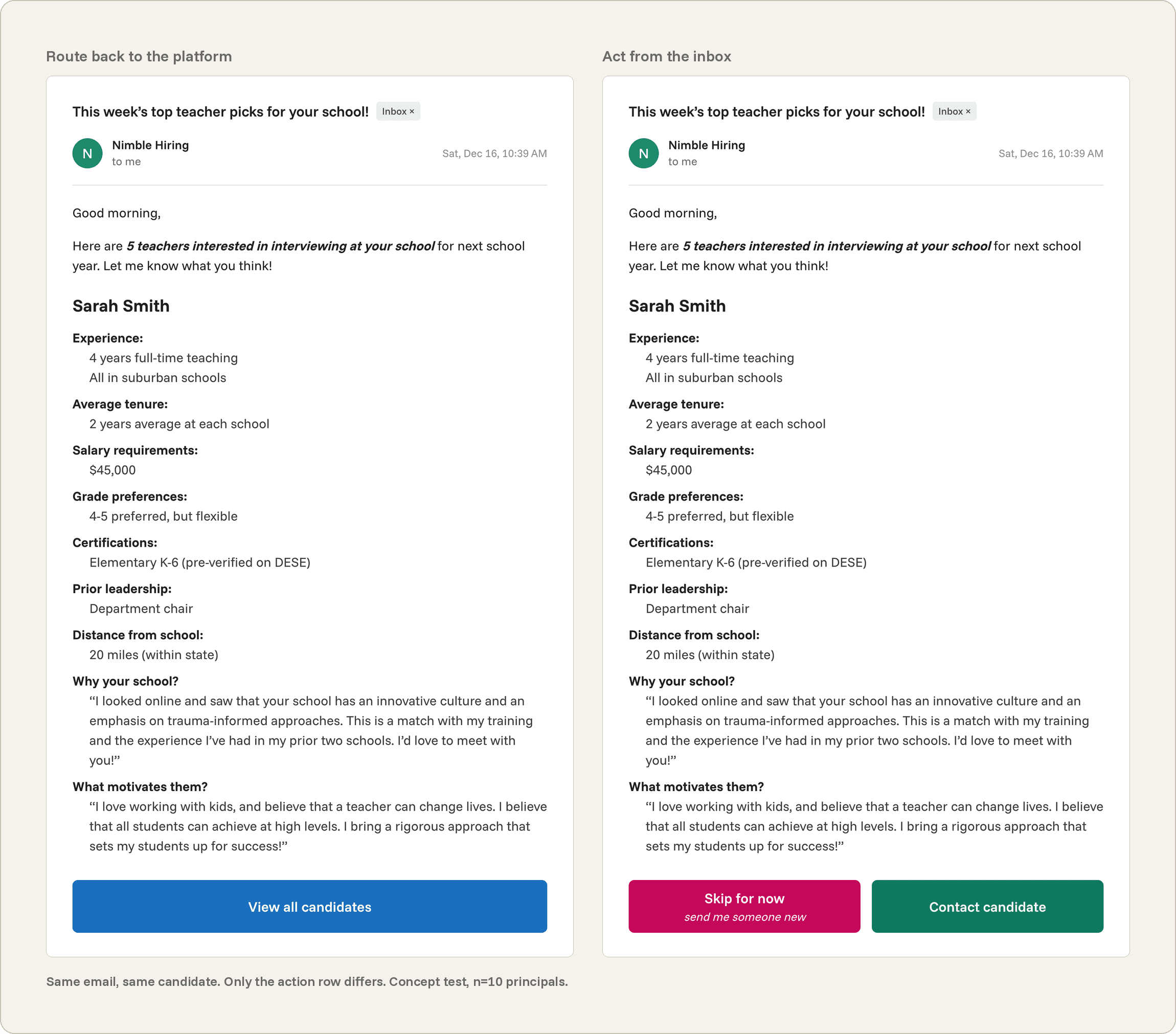
We built the inbox no-code first, so engineering didn't build anything before we knew the matches worked.
Dual opt-in is what I would measure first
The team shipped the first version of the standalone marketplace in March 2024, a month after I handed off the spec.
Dual opt-in earns a principal's trust, but it slows matching: nothing happens until both sides say yes. Before opening a second market, I'd watch how often that happens, not how many profiles sign up.


